

Some cafés are built to serve coffee. Others are built to create an experience.
In the heart of Dehradun, Serre by Sunrise belongs to the latter. While many know the Sunrise Bakery legacy, Arpit Jolly isn’t simply extending a family business—he’s reimagining what hospitality can feel like in a modern city without losing its roots.
In an exclusive conversation with Utsav Bhanja, Arpit shares his perspective on entrepreneurship, branding, leadership, and why the biggest competitive advantage isn’t décor or menus—it’s authenticity.
More Than a Café—A Reflection of Its Founder
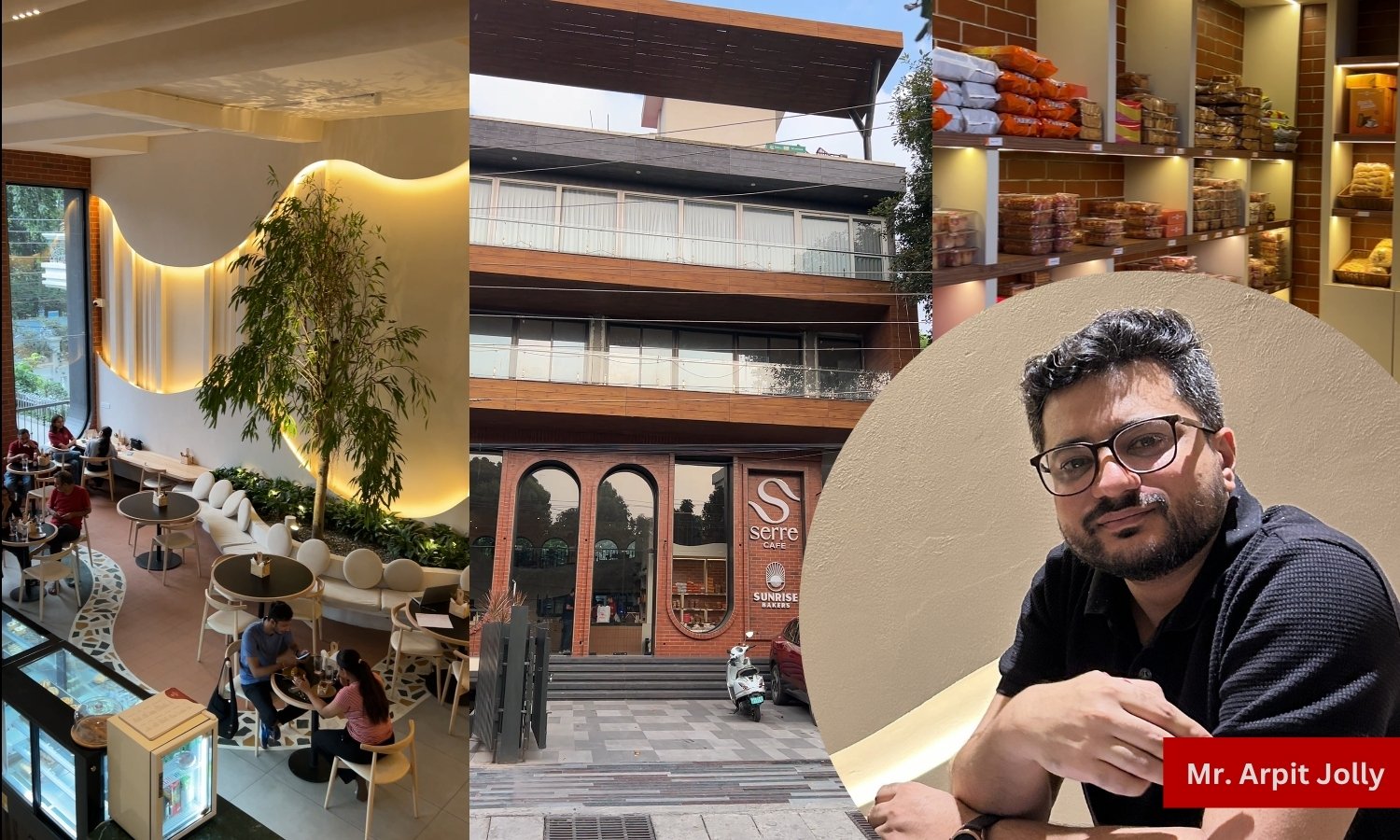
Walking through Serre, every corner reflects intentional design. From handcrafted interiors to carefully selected materials, it’s evident that nothing has been done halfway. When asked whether the effort, investment, and attention to detail were worth the immense challenge, Arpit smiles; “Sometimes I ask myself if we’ve taken too much pain. But every morning when I walk into this place, I’m happy to be here. It feels like me. It stands for what I believe in.”
For Arpit, business isn’t about copying trends. It’s about creating something that genuinely reflects the person behind the brand. He believes competitors can replicate products, menus, or aesthetics—but they can never replicate authenticity. And that, according to him, is the only sustainable differentiator.
The Real USP Isn’t Design—It’s Authenticity
Today’s café industry is filled with spaces that often look and feel alike. Arpit believes standing out isn’t about doing more; it’s about being genuine. He illustrates this with a simple yet powerful example. Instead of installing an artificial tree purely for aesthetics, Serre chose to nurture a real one.
“It isn’t just decoration,” he explains. “If we’re willing to care for something as simple as a tree every single day, customers subconsciously understand that we’ll bring the same care to the food we serve.”
Every design decision, every operational choice, and every small detail becomes a reflection of the brand’s values. For Arpit, authenticity isn’t something a business claims—it’s something customers experience.
Building a Legacy, Not Just a Business
The conversation naturally shifts from branding to purpose.
Many entrepreneurs build businesses for immediate returns. Arpit sees it differently. He believes that brands capable of standing the test of time are built with patience rather than urgency. Using a powerful metaphor, he explains:
“When a tree falls in a forest, everyone hears the noise. But when a seed grows, nobody notices.”
Meaningful businesses, he says, grow quietly and consistently. The goal isn’t to create something that becomes popular overnight. It’s to build something that people continue to remember years later. Because true legacy isn’t measured by short-term profits—it’s measured by what remains after you’re gone.
Leadership Begins With Listening
Perhaps the most insightful part of the conversation moves away from architecture and branding and focuses on people. Managing a restaurant means leading individuals from vastly different cultures, languages, and backgrounds.
“My barista is from South India. My chef is from Jalandhar. I’m from Dehradun,” Arpit explains.
That diversity, while enriching, also creates unique leadership challenges. The biggest issue, he says, isn’t that employees don’t have ideas. It’s that many have spent years working in environments where they were expected only to follow instructions.
“They’ve been conditioned to keep quiet and simply do what they’re told.” That’s why, according to Arpit, simply having an open-door policy isn’t enough. As he puts it, “An open-door policy only works when people know how to knock.”
Creating a Culture of Psychological Safety
For Arpit, leadership isn’t about authority. It’s about creating an environment where people feel safe enough to contribute. Every employee should know that their opinions matter. Every suggestion deserves to be heard. Every individual brings unique strengths. Rather than adopting a one-size-fits-all approach, he believes leaders must understand what motivates each individual and tailor their management style accordingly.
When people feel respected and valued, something remarkable happens. They stop working merely for salaries. They begin taking ownership. They become more creative. Most importantly, they become loyal.
Great Teams Are Built One Conversation at a Time
Arpit acknowledges that building such a culture takes patience. Trust cannot be demanded. Culture cannot be written into policy documents. It has to be earned every single day. Not every employee will bring a million-dollar idea. But when everyone feels included, every contribution strengthens the organisation. Leadership, therefore, becomes less about directing people and more about enabling them to succeed.
Business With Heart
Throughout the conversation, one theme remains constant—purpose. Whether discussing branding, architecture, food, or people, Arpit repeatedly returns to the same belief: Businesses built solely for profit rarely leave a lasting impression. Businesses built with intention create communities. That philosophy is visible across Serre—not only in its thoughtfully designed space but also in the culture being nurtured behind the scenes.
Final Thoughts
As cafés across India compete for attention through aesthetics and social media trends, Serre offers a refreshing reminder that genuine hospitality cannot be manufactured.
It’s built through patience; through people; through purpose.
And through leaders willing to invest in culture before chasing growth. For entrepreneurs, founders, and business leaders alike, Arpit Jolly’s journey offers an important lesson: Products attract customers. Authenticity builds brands. But people build legacies.